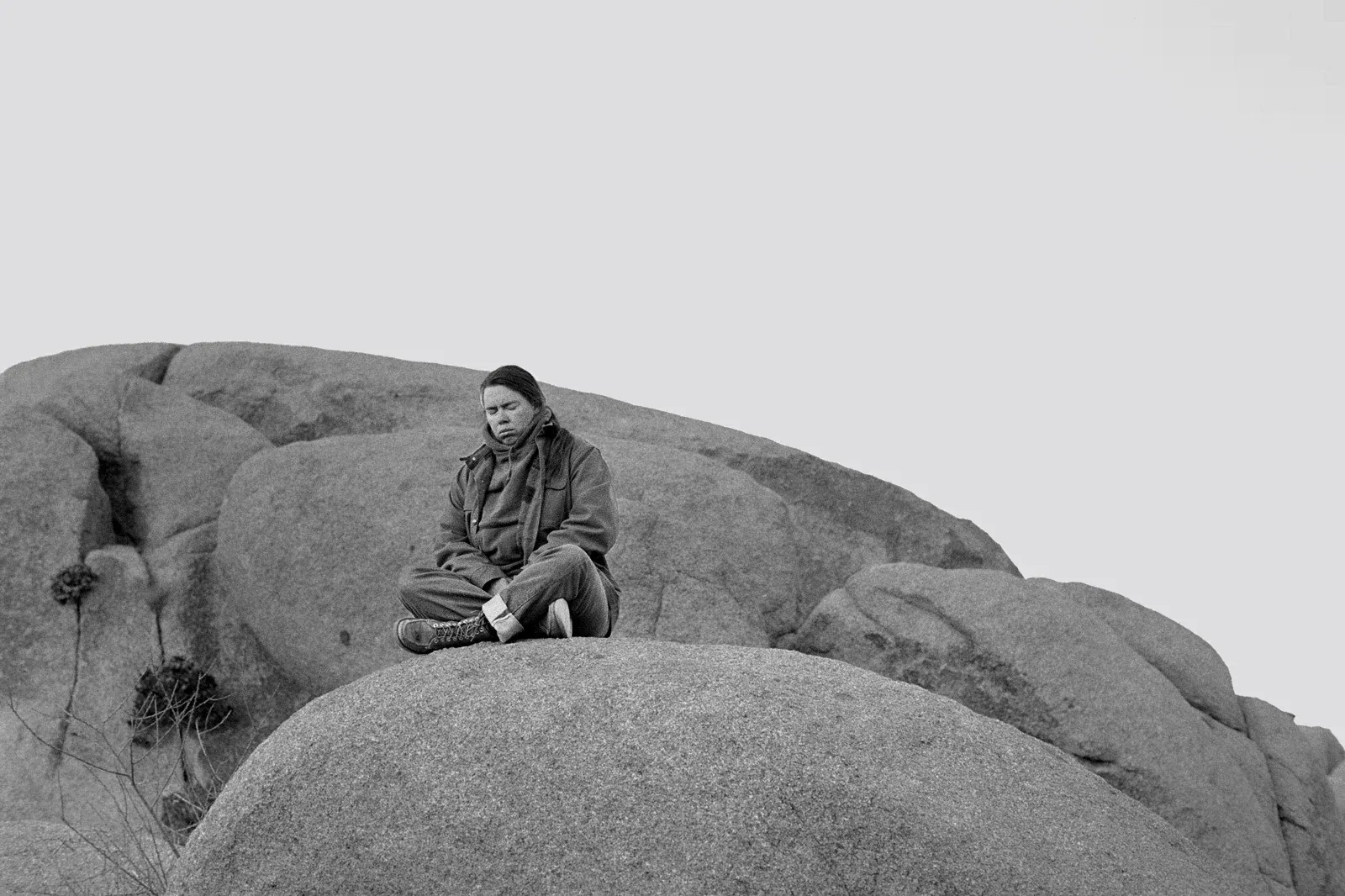
The film, Deep Listening: The Story of Pauline Oliveros, emphasizes something that feels especially urgent now; Oliveros’s belief that listening can be healing—not in a shallow, slogan-like way, but in the practical way that true listening reduces violence and restores healthy curiosity, as it makes room for complexity, diversity, and difference. The director calls her message one of “healing, unity and unbridled creative expression,” and the film treats that message not as sentimental inspiration, but as a discipline. Oliveros’s listening wasn’t naive. It didn’t pretend the world was already harmonious. It insisted that harmony—real harmony—requires attention, patience, and relationship.
“STOP MAKING SENSE” Packs Joshua Tree Theater
As soon as David Byrne walked onto the screen with his boombox, the energy in the room was electric.
The Hi-Desert Cultural Center’s Blak Box Theater was the place to be for a truly unforgettable, packed-house screening of STOP MAKING SENSE. The event, presented in stunning 7.1 cinematic surround sound, turned the already-legendary Talking Heads concert film into a fully immersive experience that had the audience buzzing from start to finish.
Patrons arrived to find a lively atmosphere, enhanced by a full bar serving expertly hand-shaken mixed drinks. Conversations were filled with excitement as fans—some longtime devotees, others discovering the film for the first time—settled into their seats, drinks in hand, ready to witness one of the greatest concert films of all time.
As soon as David Byrne walked onto the screen with his boombox, the energy in the room was electric. The film’s pulsating rhythms, delivered through the theater’s state-of-the-art surround sound, created an almost tangible presence, making it feel as though the band was performing right in front of the audience.
The night also featured an engaging panel discussion led by the Hi-Desert Cultural Center’s Film Institute directors, Matthew Caron and Patricia Vernhes. The discussion delved into the film’s enduring legacy, its groundbreaking cinematography by Jonathan Demme, and the sheer artistry of Talking Heads’ performance.
From the stunning audiovisual presentation to the thoughtful conversation… it wasn’t just a movie screening—it was a celebration of music, film, and community, proving once again that Stop Making Sense is more than just a concert film; it’s an experience that continues to bring people together, decade after decade.
FILM INSTITUTE
SHARE THIS POST:
Control stands apart from most music biopics because it refuses to turn Curtis into a simple icon or legend. Instead of building toward a triumphant performance or a tidy moral, the film lingers on the small spaces where Curtis’s life actually unfolded–small homes, rehearsal rooms, backstage hallways, and hospitals.
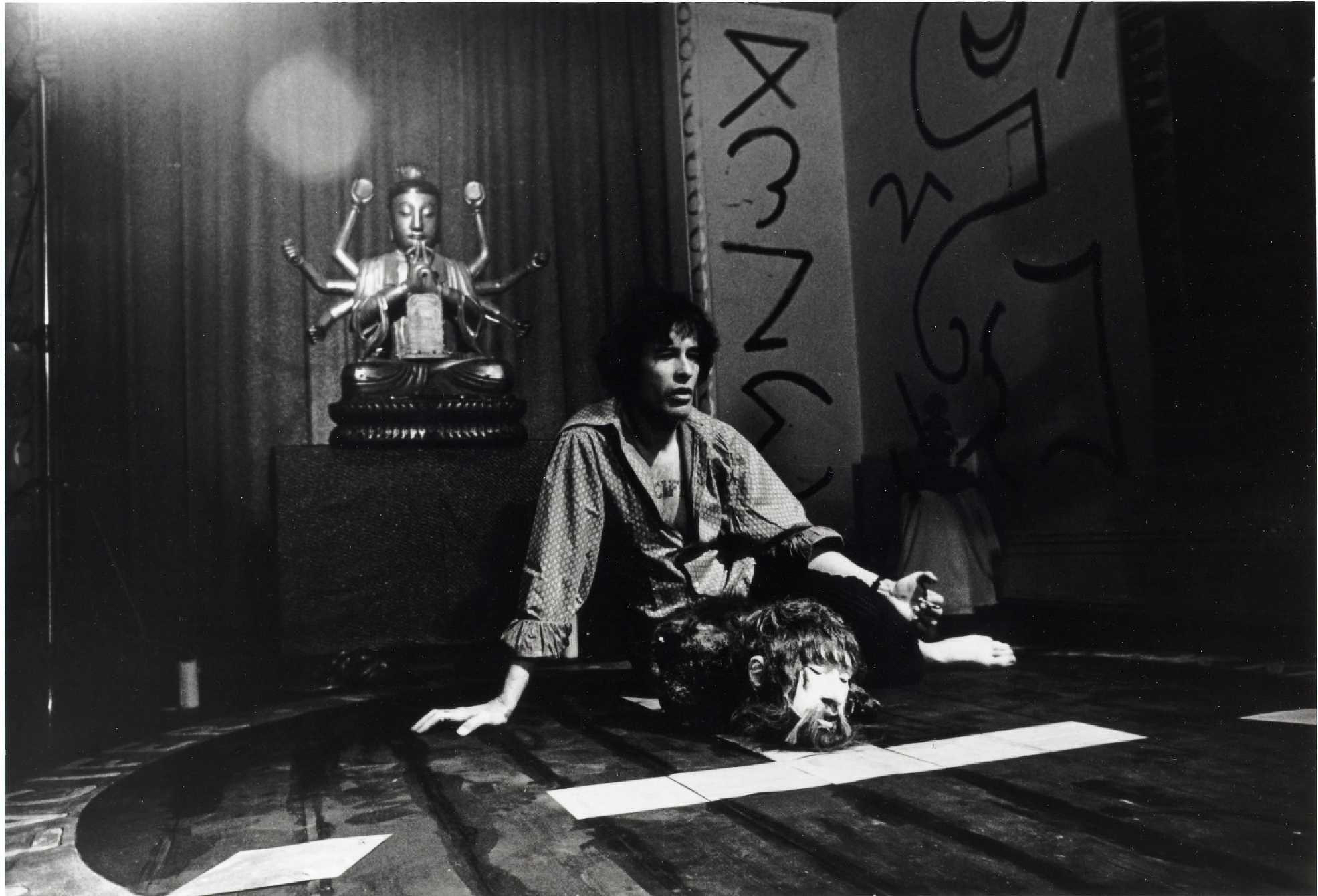
Kenneth Anger considered cinema not as storytelling but as an act of Magick in the tradition of Aleister Crowley’s “art and science of causing change in accordance with one’s will.” The film is not meant to explain itself. Its creator believed that meaning, like ritual, is experiential; it is something the viewer feels, not interprets.
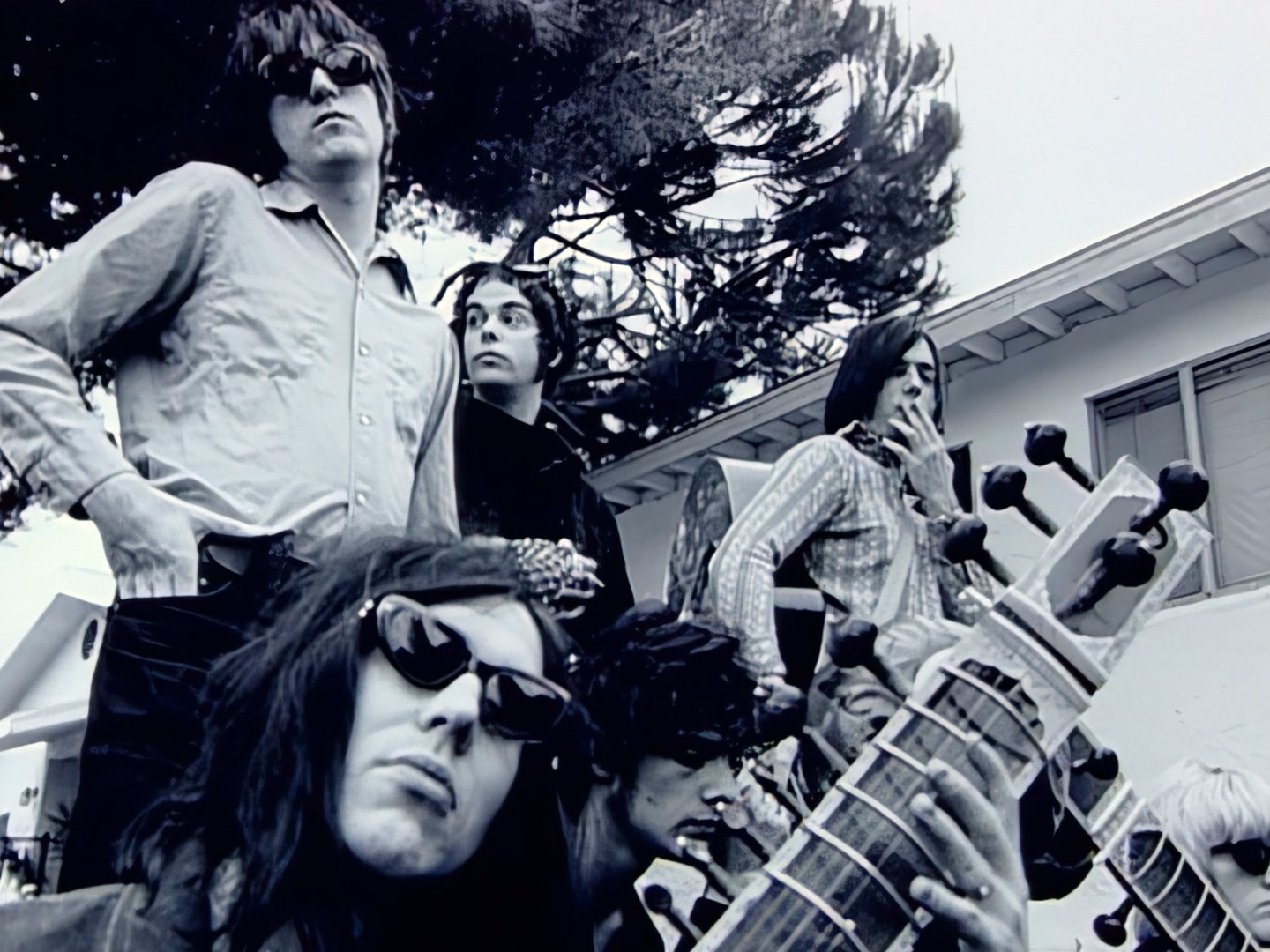
Ondi Timoner has a singular talent for capturing lighting in a bottle. Her body of work is full of indelible portraits of figures who capture a moment in time, and often they are characters that no one else would have thought to follow, or could endure following.
It’s a miracle that someone like Wadleigh wound up in charge of the massive enterprise of Woodstock, and it endures because it is the work of someone with a romantic poet’s sensibility, rather than Hollywood or Madison Avenue.
The Hi-Desert Cultural Center is proud to present a special screening of ENO, the first-ever generative documentary film in a one-night-only event featuring an introduction by Orian Williams, one of the revolutionary film’s producers.
No event found!